Advertisements
Why Ancient Building Secrets Might Just Save Our Future
🌊 “Built to last” has nothing on Roman concrete
Let’s be real—most of our modern concrete structures are falling apart faster than your last iPhone update. Bridges crack. Piers crumble. Seawalls erode. But Roman concrete? It’s been defying storms, salt, and centuries.
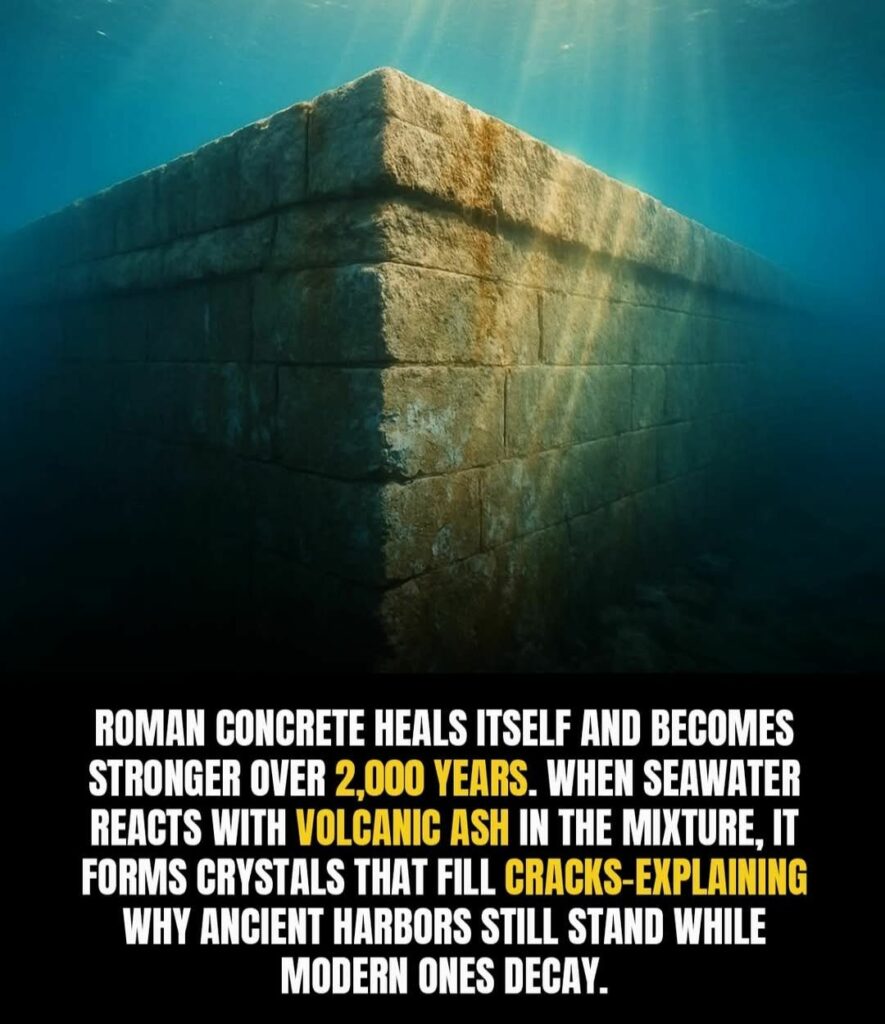
Harbor walls built 2,000 years ago are still standing strong. And the crazy part? They’re underwater.
How?
In this article, we’re diving into the ancient recipe that modern science is just now starting to understand. You’ll see how this ancient tech could be the future of eco-friendly construction, climate resilience, and even self-healing materials.
Let’s crack open the mystery (pun intended).
🧪 H2: Roman Concrete — The Original Smart Material
H3: The secret recipe: ash, lime… and seawater?!
The Romans didn’t just throw some gravel and glue together. They used a genius combo:
- Volcanic ash (from places like Pozzuoli, near Naples)
- Lime (calcium oxide)
- Seawater
This wasn’t trial and error—it was chemical alchemy.
📌 Why it matters: When seawater enters cracks in the concrete, instead of causing damage, it starts a healing process. Over time, minerals like tobermorite and phillipsite form, sealing the crack from within.
🧠 It’s like the concrete knows how to fix itself.
🔧 H2: Tip #1 – Use Nature as a Partner, Not an Enemy
H3: Romans didn’t fight the sea—they worked with it
Most modern concrete weakens in contact with water. But Roman concrete gets stronger. The minerals formed by seawater reactions make it tougher over time.
💡 What we can learn:
- Build with materials that react positively to their environment
- Explore combinations of natural elements for long-term durability
📌 Benefit to you: Smarter building = fewer repairs, lower costs, longer lifespans
🌍 Eco-angle: Using materials like volcanic ash reduces the need for high-carbon cement. That’s a win for green construction.
🏗️ H2: Tip #2 – Build to Withstand, Not Just to Function
H3: Ancient harbors were built for eternity
Roman engineers weren’t thinking 10-year lifespan. They were thinking forever.
They used pozzolanic reactions that created crystal structures over time. Instead of degrading, the material actually evolved and strengthened.
💡 Why this matters today:
- Climate change is putting enormous stress on infrastructure
- Rising seas, floods, and saltwater corrosion are accelerating decay
- We need materials that get better over time, not worse
📌 Benefit to you: Building for resilience means safety, savings, and sustainability.
📍 Real-world parallel: Projects like Boston’s Seaport or the Netherlands’ Delta Works could benefit from “living concrete.”
♻️ H2: Tip #3 – Think Circular, Not Disposable
H3: Roman concrete didn’t just last—it left no waste
Modern concrete production accounts for 8% of global CO₂ emissions. Ancient Roman concrete? Nearly carbon-neutral by comparison.
💡 What they got right:
- Used local materials (less transport, lower emissions)
- Needed less heat to produce (lime, not cement)
- Lasted centuries, not decades
📌 Benefit to you: Lower maintenance, lower carbon footprint, longer use cycle
🏛️ Example: The Pantheon dome in Rome—still standing after 1,900+ years. No rebar. No epoxy. Just brilliant chemistry.
🔬 H2: Tip #4 – Let Science Relearn What We Forgot
H3: Modern labs are catching up with ancient wisdom
Researchers at MIT and the University of Utah have been studying Roman concrete samples under the microscope. The surprising find? Those mysterious white chunks (called lime clasts) aren’t flaws—they’re features.
💡 Why?
- When cracks form, water reaches the lime clasts
- The lime reacts, forming new binding minerals
- The result: automatic crack repair
📌 Benefit to you: Materials that fix themselves = fewer breakdowns, less downtime, massive savings
🔧 Tech tie-in: This idea is being used in modern self-healing concrete (a top AdSense keyword!) — already in pilot testing around the world.
🌊 H2: Tip #5 – Build for Tomorrow, Not Just Today
H3: What if your next project lasted 2,000 years?
From rising seas to extreme weather, our cities face new threats every year. The Romans didn’t have AI or satellites—but they built smarter by default.
💡 Takeaways for modern construction:
- Use adaptive materials that evolve over time
- Design for climate durability, not just aesthetics
- Prioritize long-term performance over short-term cost
📌 Benefit to you: Future-proof infrastructure that stands the test of time (and nature).
🌍 Use case: Coastal cities like Miami, New Orleans, or Jakarta can benefit from these resilient design principles as they battle sea-level rise.
✅ H2: Quick Recap — What Makes Roman Concrete Special?
| Feature | Why It Matters | Modern Benefit |
|---|---|---|
| Self-healing | Reacts to seawater to seal cracks | Reduces maintenance costs |
| Volcanic ash | Forms durable crystals | Strengthens over time |
| Lime clasts | Triggers mineral growth | Built-in resilience |
| Eco-friendly | Less CO₂, lasts longer | Greener cities |
| Timeless design | 2,000+ year structures | Future-proof construction |
Advertisements
❓ H2: FAQ — Roman Concrete and the Future of Building
H3: What makes Roman concrete better than modern concrete?
Its ability to self-heal, resist saltwater, and get stronger over time makes it far superior in durability and sustainability.
H3: Can we recreate Roman concrete today?
Scientists are getting close. By studying samples and recreating the ancient formula, modern labs are developing self-healing concrete inspired by Roman tech.
H3: Is Roman concrete environmentally friendly?
Yes! It uses less energy to produce and lasts much longer, making it a more sustainable alternative to traditional Portland cement.
H3: Why should we care about this now?
Because modern infrastructure is crumbling, and we’re facing rising seas. Roman concrete offers a low-emission, long-lasting solution to urgent global challenges.
💬 Wrap-Up – Back to the Future of Building
The Romans didn’t just build monuments. They built a legacy—one that’s still teaching us today.
To recap:
- Roman concrete heals itself
- It resists salt, storms, and time
- It’s more sustainable than what we use now
- It could help us build a climate-ready future
💡 Your move?
Start asking the right questions—whether you’re a builder, planner, or just curious. What can we learn from the past to fix what’s broken today?
📣 Know someone in construction or climate tech? Share this article. Or drop your thoughts in the comments—how would you use this ancient knowledge today?
Advertisements