Advertisements
We’ve all seen it: a plastic bottle floating in the ocean, a grocery bag stuck in a tree, or worse—microplastics showing up in our food and drinking water. Plastic pollution feels like a nightmare that just won’t end. Traditional plastics can linger for hundreds of years, poisoning ecosystems and sneaking into our bodies.
But what if packaging disappeared almost as fast as you used it? That’s exactly what researchers at South Dakota State University have made possible—with a breakthrough material made from grapevine waste.
In this article, I’ll show you how this eco-friendly “plastic” works, why it’s a game changer, and what it means for you and the planet.
The Problem with Traditional Plastic
Petroleum-based plastics are everywhere. From food packaging to electronics, they’ve become part of daily life. But here’s the catch:
- They take hundreds of years to decompose.
- They release toxic microplastics into soil, water, and even the air.
- They’re made from fossil fuels, adding to global warming.
In short: we use them for minutes, but they last for centuries.
The Big Discovery: Plastic Made from Grapevines
So, what’s the magic trick? The answer lies in cellulose—a natural polymer found in the woody stems (canes) of grapevines. These canes are cut every year after harvest, usually burned or discarded.
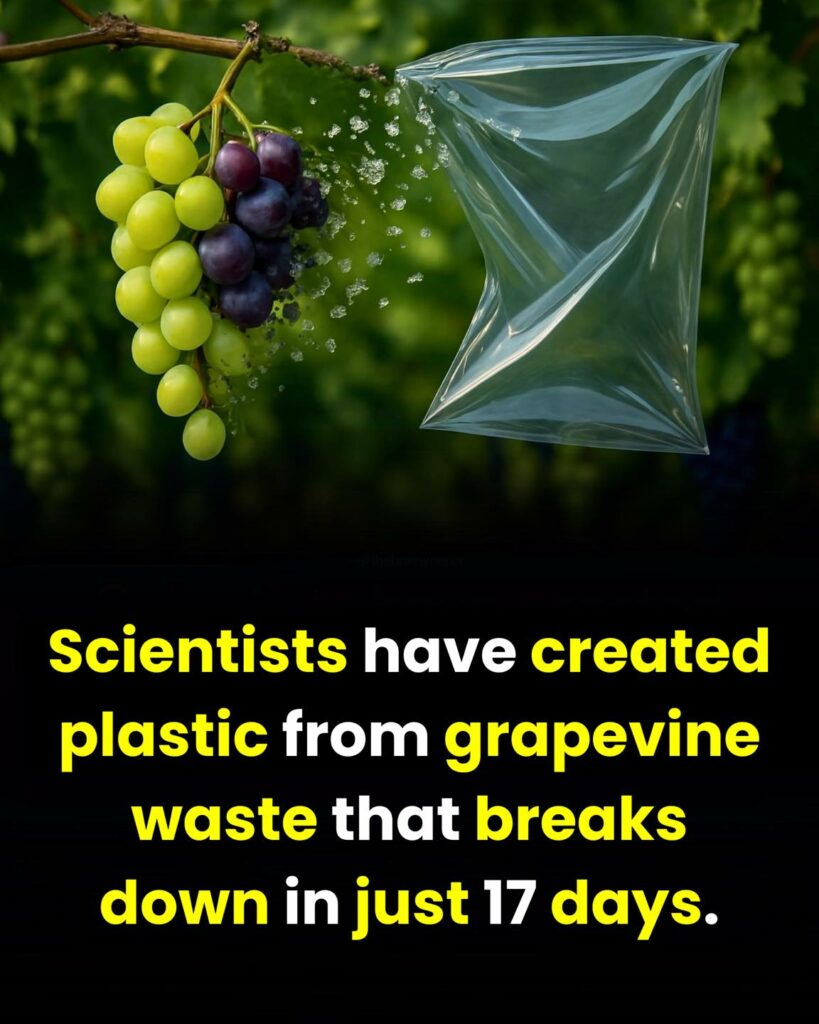
Instead of letting them go to waste, scientists figured out how to transform them into a tough, flexible, transparent film. And here’s the kicker: it fully degrades in just 17 days when buried in moist soil (around 24% humidity).
Imagine using a snack wrapper today, and by next month, it’s already gone—no toxic residue, no microplastics. Just clean soil.
Why This Matters for You
This isn’t just cool science. It could reshape the way you shop, eat, and live.
1. Eco-Friendly Packaging That Works
Unlike flimsy “green” packaging alternatives, this grapevine-based material is:
- Stronger than normal plastic
- Still transparent and flexible
- Fully biodegradable
👉 Benefit: You won’t sacrifice convenience for sustainability.
2. Turning Waste Into Value
Grapevine canes were once useless leftovers. Now, they’re a raw material for eco-packaging.
- Farmers reduce waste.
- Industries save resources.
- You get products that are guilt-free.
👉 Benefit: Every purchase helps cut both plastic waste and agricultural waste.
3. No Toxic Legacy
Unlike petroleum plastics, which leave behind toxic fragments, this material vanishes naturally.
- Safe for soil.
- Safe for water.
- Safe for future generations.
👉 Benefit: You can enjoy convenience without harming the planet.
Real-Life Example: Imagine This
Think about buying grapes at your supermarket. Right now, they’re probably packed in a plastic clamshell that will sit in a landfill until the year 2400. But with grapevine-based packaging, that container could decompose before the next grape harvest.
That’s the kind of circular economy scientists dream about—waste becoming resource, packaging disappearing as fast as it’s used.
The Bigger Picture: Goodbye Plastic Pollution?
This breakthrough isn’t just about grapevines. It’s proof that nature already holds the solutions to our pollution crisis. With cellulose-based innovations, we could see:
- Grocery bags that vanish in weeks.
- Takeaway containers that compost in your garden.
- Food films that enrich soil instead of choking landfills.
Sure, scaling up production takes time, but the potential is enormous. Imagine if Coca-Cola, Nestlé, or Amazon adopted this. The ripple effect could be massive.
Quick Recap Checklist
- ✅ Traditional plastics = centuries of pollution.
- ✅ South Dakota State University made a new plastic-like film.
- ✅ It’s made from discarded grapevine canes (rich in cellulose).
- ✅ Strong, flexible, transparent—and biodegradable in 17 days.
- ✅ No toxic residue, no microplastics, just clean soil.
- ✅ Turns waste into value, and convenience into sustainability.
FAQ: What You Need to Know
Q1: Is this material already available in stores?
Not yet. It’s still in the research phase, but companies are watching closely.
Q2: Can this replace all types of plastic?
Not immediately. It works great for films and packaging, but more testing is needed for heavy-duty uses.
Q3: How does it compare in cost?
Right now, production costs are higher than petroleum plastics. But as with solar panels, prices drop when scaled.
Q4: Will it really decompose everywhere?
It decomposes best in soil with moisture. In dry or indoor conditions, it may last longer—but it still won’t turn into microplastics.
Final Thoughts: A Future Without Plastic Trash
Here’s the bottom line: you don’t have to imagine a world without plastic pollution anymore—it’s already being built, one grapevine at a time.
Next time you unwrap a snack or carry groceries home, picture a future where that packaging vanishes naturally in weeks, leaving no trace behind.
What do you think—would you pay a little extra for packaging that saves the planet? 🌍
👉 Share this article with a friend, drop your thoughts in the comments, or tell me: what’s the most annoying piece of plastic waste you deal with daily?
The more we talk about it, the faster change will come.
Advertisements