Advertisements
Electricity powers almost everything around you—from the phone in your hand to the light above your head. But how much do you actually know about the electrical equipment that makes daily life possible?
Whether at home, school, or work, understanding the basics of electric equipment can save you money, improve safety, and even make you more energy efficient.
In this article, we’ll cover the main types of electric equipment, their uses, and some quick safety tips you should always remember.
🔌 What is Electric Equipment?
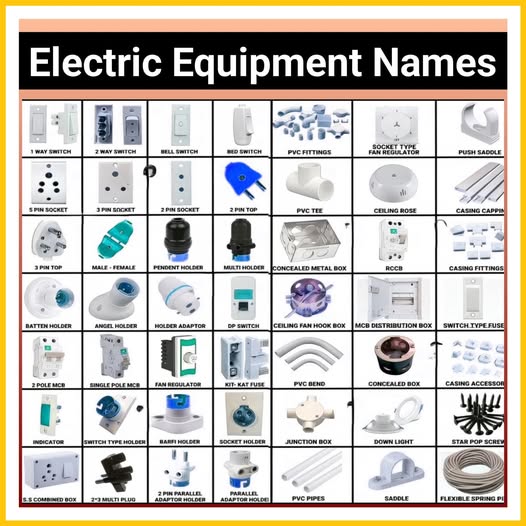
Simply put, electric equipment refers to any device or tool that runs on electricity. It includes everything from small gadgets to huge industrial machines.
- Household appliances: Fridges, washing machines, microwaves
- Power tools: Drills, grinders, saws
- Industrial machines: Motors, generators, transformers
- Everyday gadgets: Phones, laptops, chargers
✅ Benefit for you: Knowing the basics helps you use devices safely and efficiently.
🏠 Common Household Electric Equipment
Your home is full of electric equipment that makes life easier:
- Lighting: LED bulbs, lamps, smart lights
- Kitchen appliances: Blenders, toasters, coffee makers
- Cleaning equipment: Vacuum cleaners, washing machines
- Entertainment: Televisions, sound systems, gaming consoles
💡 Tip: Always check the wattage of your appliances. It tells you how much power they consume. High-wattage = higher electricity bills.
🛠️ Electric Tools for Work and DIY
If you’ve ever fixed or built something, chances are you’ve used electric tools.
- Drills – For making holes
- Electric saws – For cutting wood or metal
- Sanders – For smoothing surfaces
- Welders – For joining metals
✅ Benefit for you: Power tools save time and effort compared to manual tools.
👉 But remember: Always wear gloves, goggles, and follow safety rules when using electric tools.
⚙️ Industrial Electric Equipment
In factories and construction, larger electric equipment plays a big role:
- Motors – Convert electricity into mechanical power
- Generators – Produce electricity from fuel
- Transformers – Control voltage for safe electricity flow
- Circuit breakers – Protect systems from overload
✅ Benefit for you: Even if you don’t work in industry, knowing these basics helps you understand how power reaches your home safely.
⚡ Safety Tips for Using Electric Equipment
Electricity is powerful—but also dangerous if misused. Here are some must-know safety rules:
- ✅ Don’t overload sockets (use surge protectors instead).
- ✅ Unplug appliances when not in use.
- ✅ Keep water away from electric devices.
- ✅ Check wires for damage before plugging in.
- ✅ Use the right voltage adapters when traveling.
💡 Example: Plugging a 110V device into a 220V socket without an adapter can burn it instantly!
📝 Quick Takeaways
- Electric equipment = anything powered by electricity.
- At home: appliances, lights, gadgets.
- At work: power tools and machines.
- In industry: motors, generators, transformers.
- Safety first: never ignore damaged wires or overloaded outlets.
❓ FAQ – General Knowledge on Electric Equipment
Q1: What are the most common types of electric equipment?
Household appliances (fridges, microwaves), power tools (drills, saws), and gadgets (phones, laptops).
Q2: Why is it important to know about electric equipment?
Because it helps you use them safely, lower electricity bills, and avoid accidents.
Q3: What electric equipment uses the most energy at home?
Air conditioners, heaters, refrigerators, and washing machines are usually the top energy consumers.
Q4: How can I make my electric equipment last longer?
Regular maintenance, proper cleaning, avoiding overloads, and using correct voltage adapters.
🎯 Final Thoughts
From the phone in your pocket to massive industrial machines, electric equipment is everywhere. The more you know about it, the safer, smarter, and more efficient your daily life becomes.
👉 Now it’s your turn: Which electric equipment do you use the most every day—your phone, your fridge, or maybe your laptop? Drop your answer in the comments! ⚡
And don’t forget to share this article with friends who love fun general knowledge facts.
Advertisements