Advertisements
They say “the eyes are the window to the soul.” But did you know that people’s eye movements can actually reveal what’s going on in their minds? According to techniques often used in Neuro-Linguistic Programming (NLP) and body language studies, different eye directions can give you hints about whether someone is remembering, constructing, imagining, or even lying.
Here’s a simple guide to help you understand what eye positions mean when you’re observing someone.
The Basics of Eye Movement
When people think, recall, or imagine, their eyes often shift in predictable directions. This isn’t about reading minds exactly—it’s about recognizing patterns in how the brain processes information.
- Looking LEFT → Usually connected to remembering (images, sounds, or feelings).
- Looking RIGHT → Usually connected to constructing (imagining or inventing new information).
- Looking Straight Ahead → Often connected to visualizing or deep focus.
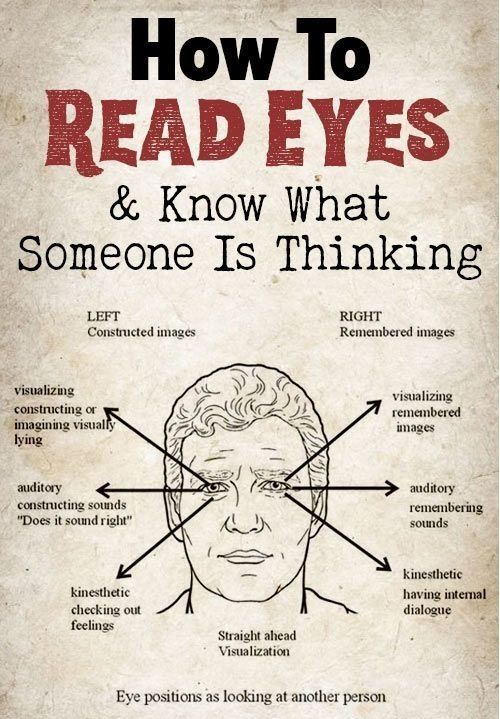
Eye Movement Guide (from your point of view facing the person)
🔹 Visual Cues
- Up Left → Visual remembered images (recalling something seen before).
- Up Right → Visual constructed images (imagining or creating something new; sometimes linked to lying if the story doesn’t match memory).
- Straight Ahead (defocused) → Visualization or daydreaming.
🔹 Auditory Cues
- Left (side) → Auditory remembered sounds (recalling a song, voice, or conversation).
- Right (side) → Auditory constructed sounds (“What would it sound like if…?”).
🔹 Kinesthetic (Feelings & Touch)
- Down Right → Kinesthetic processing (checking in with feelings, emotions, or physical sensations).
🔹 Internal Dialogue
- Down Left → Internal dialogue (talking to oneself, reasoning, or planning silently).
Examples in Real Life
- When you ask someone: “What did your room look like as a kid?”
→ Their eyes may shift up left as they recall a real memory. - Ask: “What would a purple elephant look like dancing in your kitchen?”
→ Their eyes might go up right, since they’re constructing an image. - Ask: “Can you remember your favorite song from school?”
→ Eyes may move left sideways, tapping into auditory memory. - Ask: “How would it sound if dogs could talk?”
→ Eyes may go right sideways, constructing new sounds.
Can This Detect Lies?
A common belief is that if someone looks up right (constructing images), they may be making up a story. While this can sometimes hint at fabrication, it’s not foolproof. Eye movement patterns vary between individuals and can be influenced by stress, cultural habits, or even left/right handedness.
So instead of using it as a “lie detector,” think of it as a clue to how someone is processing information.
Tips for Using Eye Reading
- Don’t rely on eye movement alone. Combine it with tone of voice, body language, and context.
- Watch natural patterns. Some people glance a certain way out of habit.
- Practice casually. Try asking friends memory vs. imagination questions and notice their eyes.
- Stay respectful. This isn’t about manipulation—it’s about better understanding communication.
Final Thoughts
Reading eyes is like getting a glimpse of how the brain works in real time. While it won’t make you a mind reader, it can give you fascinating insights into whether someone is remembering, constructing, listening, feeling, or reasoning.
So the next time you’re chatting with someone, watch their eyes—you might discover more than words can say. 😉
Advertisements