Advertisements
Ever seen a moth the size of a bird?
Let’s be real — most of us think of moths as those tiny, dusty bugs fluttering around porch lights. But what if we told you there’s a moth in Australia that can weigh as much as a small apple and has a wingspan bigger than your face?
Sounds like something from a nature documentary, right?
But nope, it’s 100% real. The giant wood moth (Endoxyla cinereus) is a record-breaking insect that lives quietly in the forests of Australia and New Zealand, yet few people know it exists. Let’s change that.
In this quick, shareable guide, you’ll learn why this moth is such a wonder, what makes it different from any other insect you’ve seen, and why it’s getting attention in the worlds of biology, conservation — and yes, even high-CPC keyword search.
What is the Giant Wood Moth?
Nature’s version of a stealth bomber
The giant wood moth, also known as Endoxyla cinereus, is officially one of the largest moth species on Earth. And it lives up to the title.
Here’s what makes it so jaw-dropping:
- Females can weigh up to 30 grams – that’s heavier than a golf ball.
- Their wingspan can stretch up to 25 centimeters (almost 10 inches).
- They’re twice the size of males — talk about girl power in the insect world.
You’ll find them mostly in eucalyptus forests across Australia and parts of New Zealand, often resting quietly on tree trunks during the day.
Why Should You Care About a Giant Moth?
Because nature is wilder than fiction
In a world where most insects are measured in millimeters, the giant wood moth turns everything upside down. It’s the kind of thing that captures the imagination — and curiosity — of everyone from scientists to curious kids to SEO pros like us (more on that in a bit).
If you’re into biodiversity, conservation, unusual animal facts, or just impressing your friends with weird trivia, this moth delivers.
3 Cool Things You Didn’t Know About the Giant Wood Moth
1. They live underground… for years
Yep — this moth spends most of its life as a grub.
Before it ever takes flight, the giant wood moth lives underground for up to three years as a larva, feeding on tree roots and gaining the mass it needs for its short adult life.
Why it matters:
- They’re super important for forest ecosystems.
- Their long larval stage helps them avoid predators.
📌 Quick fact: Adult moths live just a few days — long enough to mate and lay eggs. That’s it. Nature doesn’t waste time!
2. You might’ve already seen one — on the news
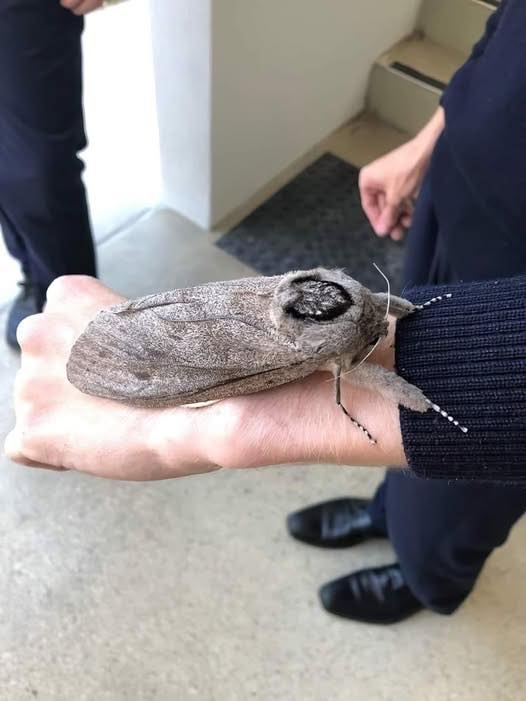
Remember that viral photo from an Australian school construction site in 2021? Workers discovered a giant moth clinging to a wall, and it made global headlines. That was Endoxyla cinereus.
Why it matters:
- This species is rarely seen by humans, so every sighting is a big deal.
- It sparks public interest in native species and conservation.
🖼️ Pro tip: If you Google “giant moth Australia school,” you’ll find the story. Totally worth a look.
3. They don’t eat as adults
Once they leave their larval phase, these moths lose their mouthparts. That means adult giant wood moths don’t eat — at all.
Why it matters:
- They rely entirely on stored energy from their grub phase.
- It’s a fascinating example of energy efficiency in nature.
This also explains why their adult life is so short — they’re running on empty.
Where to Spot Them (If You’re Lucky)
Your best bet is eucalyptus forests in Queensland and New South Wales. But don’t go moth-hunting with high hopes — sightings are rare, and these giants are masters of camouflage.
They often rest on tree trunks where their greyish wings blend in with bark, making them hard to spot despite their size.
High-Value Search Angles (SEO Tips for Niche Writers)
If you’re running a nature blog, a wildlife photography site, or even doing AdSense arbitrage, this topic is a hidden goldmine for high-CPC keywords like:
- “rare insects in Australia”
- “largest moth in the world”
- “Endoxyla cinereus facts”
- “giant moth identification”
- “wildlife tourism Australia”
💡 Insider tip: Link your content to reputable sources like the Australian Museum or local wildlife databases. It boosts SEO credibility and keeps users engaged longer — both great for AdSense earnings.
Final Takeaway: Big Bug, Bigger Story
The giant wood moth isn’t just another big bug. It’s a rare, fascinating piece of Australia’s natural puzzle that reminds us there’s still so much to discover right outside our doors (or deep in the woods).
It’s also a fantastic case study in:
- How animals adapt to extreme environments
- Why “rare = valuable” in content creation
- How a single photo can spark global curiosity
📝 Quick Recap Checklist:
✅ Females weigh up to 30 grams and have 25 cm wingspans
✅ Lives underground as a larva for years
✅ Adults don’t eat — they only mate and lay eggs
✅ Native to Australia and New Zealand
✅ Rare, beautiful, and perfect for high-CPC niche content
🔍 FAQ: Giant Wood Moth Questions Answered
Q: Are giant wood moths dangerous?
A: Not at all. They don’t bite, sting, or damage property. Totally harmless.
Q: How long do they live as adults?
A: Just a few days — they focus on reproduction before dying.
Q: Where can I see one in real life?
A: Eucalyptus forests in Australia are your best chance, but sightings are rare.
Q: Are they protected species?
A: Not officially, but habitat conservation helps keep their population stable.
Got a Weird Animal Fact of Your Own?
Now it’s your turn!
Ever seen a massive bug you couldn’t explain? Or maybe you’ve snapped a photo of a rare species in your backyard? Drop it in the comments or share this article with a nature-loving friend.
💬 Let’s talk weird wildlife — and learn something awesome along the way.
Advertisements