Advertisements
Why Andalusia Still Inspires Us Today
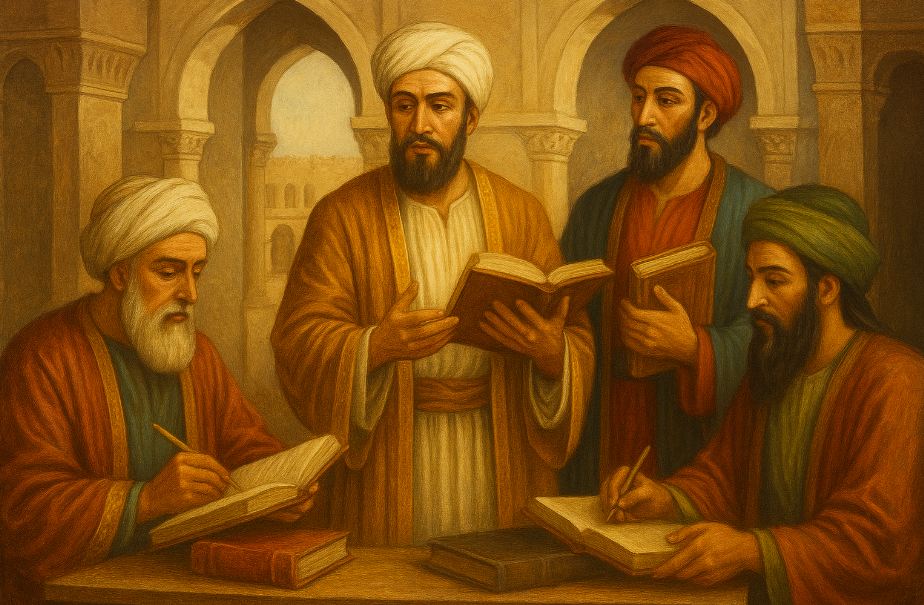
Imagine a time when Europe was trapped in the Dark Ages while, in Andalusia, libraries held thousands of books, scholars debated in vibrant courtyards, and ideas traveled faster than armies. Sounds almost unreal, right? Yet this was the golden age of Muslim philosophers like Ibn Rushd (Averroes), Ibn Khaldoun, and many others who shaped not only Islamic thought but also modern science, medicine, and philosophy.
And here’s the exciting part: their wisdom isn’t just history. Their way of thinking can still teach you how to live smarter, question deeper, and create better solutions today. In this article, we’ll explore their genius, their ideas, and their most famous publications — all in a simple, engaging way.
Ibn Rushd (Averroes): The Defender of Reason
Philosophy Meets Faith
Ibn Rushd, known in Europe as Averroes, was one of the brightest lights of Andalusia. He believed that faith and reason could live side by side, not fight each other. At a time when blind faith ruled, his works insisted that logic, philosophy, and religion should complement one another.
- Why it’s powerful: His courage to question paved the way for Europe’s Renaissance thinkers.
- Benefit for you: He shows us that questioning isn’t rebellion — it’s growth.
- Example: His famous book Tahafut al-Tahafut (“Incoherence of the Incoherence”) argued against strict dogmatism and influenced Western philosophers like Thomas Aquinas.
Ibn Khaldoun: The Father of Sociology
The Man Who Read History Like a Scientist
Ibn Khaldoun is often called the father of sociology and economics. In his masterpiece, the Muqaddimah (Introduction), he explained how societies rise, grow, and collapse. Forget dry history — he made it sound like a living science.
- Why it’s powerful: He looked at history as a cycle, not random chaos.
- Benefit for you: You can understand today’s world better by studying his methods — think political shifts, economic crises, even business cycles.
- Example: Modern economists still quote his ideas about taxation and government spending.
The Legacy of Andalusian Wisdom
Beyond Two Names
While Ibn Rushd and Ibn Khaldoun get the spotlight, Andalusia also gave us:
- Ibn Arabi, the mystic philosopher who spoke about unity and love.
- Al-Zahrawi, the surgeon whose medical encyclopedia shaped European medicine.
- Ibn Hazm, the thinker who explored ethics, law, and even love poetry.
- Why it’s powerful: This mix of philosophy, science, and spirituality created a complete vision of knowledge.
- Benefit for you: It reminds us that wisdom isn’t in one field — true genius comes from connecting ideas.
What You Can Learn From Them Today
1. Question with Respect
Don’t just accept things because “that’s how it’s always been.” Like Ibn Rushd, you can balance faith and critical thinking.
2. Study Cycles, Not Just Events
Like Ibn Khaldoun, look for patterns. This works in business, politics, and even personal life.
3. Connect Knowledge Across Fields
Don’t box yourself in. Andalusian scholars were doctors, poets, philosophers, and scientists — often at the same time.
Quick Checklist: Andalusian Philosophers’ Genius
- Ibn Rushd → Philosophy + reason
- Ibn Khaldoun → Sociology + economics
- Ibn Arabi → Mysticism + spirituality
- Al-Zahrawi → Medicine + surgery
- Ibn Hazm → Ethics + law
FAQ
1. Why were Andalusian Muslim philosophers so important?
They preserved Greek philosophy, expanded it with Islamic thought, and passed it on to Europe — fueling the Renaissance.
2. What is Ibn Rushd best known for?
For defending reason in philosophy and writing Incoherence of the Incoherence.
3. Why is Ibn Khaldoun called the father of sociology?
Because his Muqaddimah explained how societies develop using scientific methods.
4. Are their works still studied today?
Yes! Many universities still teach their writings in philosophy, history, and economics programs.
Final Thoughts – Andalusia’s Gift to the World
The genius of Andalusian philosophers wasn’t just in their books but in their spirit: curious, brave, and open to knowledge from everywhere. From Ibn Rushd’s bold defense of reason to Ibn Khaldoun’s scientific view of history, their ideas still echo in our modern world.
👉 Now it’s your turn. Which philosopher inspires you the most — Ibn Rushd, Ibn Khaldoun, or another Andalusian thinker? Drop your thoughts in the comments below, and let’s spark a new age of conversation — just like they did centuries ago!
Advertisements