Advertisements
A Short and Punchy Start
Ever noticed how even the strongest giants eventually stumble? History shows us that empires rise like rockets… and then, slowly, gravity pulls them back down. The Ottoman Empire is one of the best examples: once the most powerful empire on earth, it later slipped into decline. If you’ve ever wondered why, this article is for you.
I’m going to walk you through the golden age of the Ottomans, then explain the early warning signs of their decline — in a way that’s simple, clear, and easy to follow. Think of it as a quick chat with a friend who loves history and knows where the real lessons are hidden.
The Rise: A Golden Age of Power and Innovation
1. The Reign of Suleiman the Magnificent
- The Peak of Power: Suleiman (1520–1566) expanded the empire’s territory from Hungary to Iraq.
- Why It Matters: This wasn’t just military might — it was cultural, architectural, and economic brilliance. Think of Istanbul’s mosques, the legal reforms, and trade routes buzzing with wealth.
- Benefit for You: Understanding this period helps you see how leadership can inspire growth. Whether in business or personal life, strong vision equals strong results.
- Example: Under Suleiman, the Ottomans controlled the Mediterranean Sea. That’s like having the internet’s main server in your hands today!
2. Cultural Brilliance and Knowledge
- The Flourishing Arts: Calligraphy, poetry, and Islamic architecture reached new heights.
- Education and Law: Madrasas (schools) spread knowledge, while laws balanced justice with religion.
- Benefit for You: This shows the power of investing in knowledge — what you learn today becomes the strength of tomorrow.
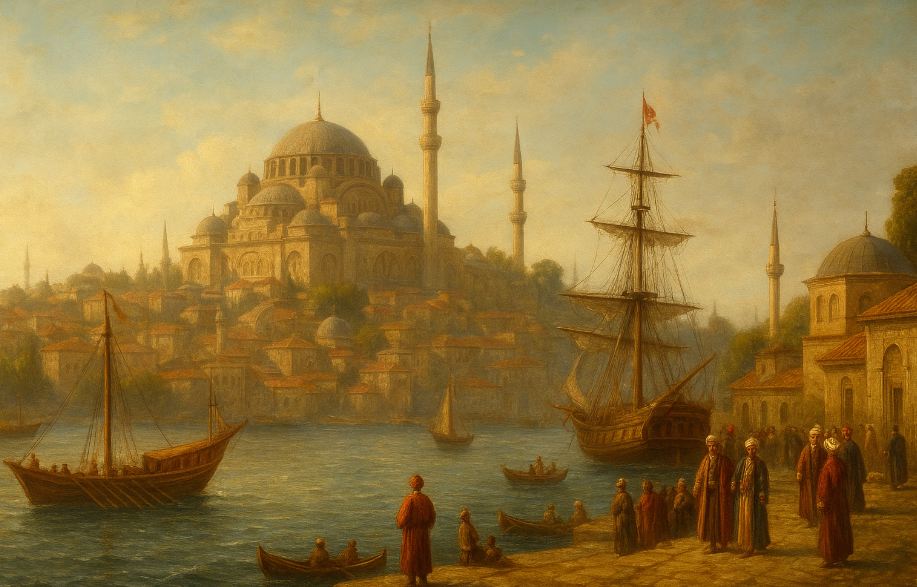
- Anecdote: The Süleymaniye Mosque in Istanbul is not just a place of worship but a symbol of Ottoman genius.
3. Trade and Wealth
- Strategic Location: The Ottomans sat on the “Silk Road” between Europe and Asia.
- What It Brought: Gold, spices, textiles — everything flowed through their cities.
- Benefit for You: Location and timing matter in success. Position yourself where opportunities naturally come to you.
- Example: Think of Istanbul then as today’s Singapore — a global hub where East meets West.
The Slow Decline: When Cracks Began to Show
1. Over-Expansion and Military Strain
- The Problem: Stretching too far, too fast. Managing distant lands drained money and soldiers.
- Benefit for You: Growth is great, but uncontrolled expansion can backfire. Even in personal finance, stretching beyond limits causes cracks.
- Example: After the failed siege of Vienna in 1683, the empire’s aura of invincibility faded.
2. Economic Competition and New Routes
- The Challenge: Europeans discovered sea routes to India and bypassed Ottoman trade.
- Result: Decline in revenue, less control of world trade.
- Benefit for You: Adapt or lose out. When the market shifts, flexibility keeps you alive.
- Example: Think of how Netflix adapted to streaming, while Blockbuster collapsed. The Ottomans… stayed Blockbuster.
3. Weak Leadership and Corruption
- The Shift: After Suleiman, many sultans were weak or uninterested in ruling.
- What Happened: Corruption grew, the Janissaries (elite troops) became too powerful, and reforms were ignored.
- Benefit for You: Leadership is about responsibility, not titles. Without vision, even the strongest team collapses.
- Anecdote: Some later sultans spent more time in the palace harem than in state affairs — the empire suffered the cost.
4. Technological Stagnation
- The Gap: While Europe embraced the Industrial Revolution and modern science, the Ottomans resisted change.
- Result: Military and economic power weakened.
- Benefit for You: Staying updated keeps you relevant. Ignoring innovation means falling behind.
- Example: Imagine using a 2005 Nokia phone in today’s iPhone-dominated world. That’s how the Ottomans looked compared to Europe.
Lessons for Today
The Ottoman story isn’t just about the past. It’s about timing, leadership, and adaptation. When you grow, make sure it’s sustainable. When things change, stay flexible. And above all — never stop learning.
Quick Recap Checklist
- Strong leadership drives growth (Suleiman’s era).
- Invest in knowledge and culture.
- Expansion is great but must be sustainable.
- Always adapt to new technologies and markets.
- Corruption and weak leadership kill progress.
FAQ
Q1: When was the golden age of the Ottoman Empire?
Between the late 15th and 16th centuries, peaking during the reign of Suleiman the Magnificent.
Q2: What caused the Ottoman Empire’s decline?
Over-expansion, economic competition, weak leadership, corruption, and resistance to innovation.
Q3: Why is the Ottoman Empire important today?
It shaped the politics, culture, and economy of the Middle East, Europe, and Asia for centuries.
Q4: What can we learn from their decline?
That success without adaptation is temporary. Flexibility and innovation keep you ahead.
Final Thoughts – Over to You!
So, there you have it: the rise and slow decline of the Ottoman Empire in a nutshell. From Suleiman’s golden age to the empire’s fading power, the story is packed with lessons you can apply in life and business.
What do you think? Have you seen examples where leaders (in politics, sports, or even companies) failed because they couldn’t adapt? Drop your thoughts in the comments or share this article with a friend who loves history!
Advertisements